Showing posts with label Nonfiction. Show all posts

Friday, 1 July 2022

Nonfiction Review: Janesville

My mistake has been proven again! As is often the case, one of my bookstores took a book that I had no interest in reading, but once I started, I really liked it. This time, the book is Janesville .

Janesville is an active and prosperous city in rural Wisconsin. GM opened the plant in February 1923 and the assembly plant has been in operation for more than 80 years. It grew to 4.8 million square feet and employed more than 7,000 people. And on December 23, 2008, the last car left the assembly line. This book covers a little bit of the history of the Geneva plant and the city, but it is mostly about what happened after the closure of the GM factory. The author tells this story through a series of locals, many of whom have worked in the factory for years and are suddenly unemployed, but who are trying to help the GMMs. The characters in this story are all different. Some have found other jobs, although in recent years GM has been a major part of the economy, and companies that supply other goods or services to factories have had to be fired or laid off. Some return to local colleges for re-training with support and other resources. Others could not accept a sudden pay cut and agreed to move to another GM factory, which meant only working days and very long trips to see their families on weekends. For the first time in their lives, many families benefit from charitable and food aid. The effects of factory closures are widespread and long-lasting, and the authors examine why cities have not been able to survive such disruptive changes. He saw not only the economic situation but also the political and social situation and he felt sorry for the real people involved in this tragedy.

Despite my doubts and hopes for a dry future, I was immediately drawn to this fascinating and heartbreaking story. The author has done a lot of research and talked not only with his staff but also with other members of the community, including bankers, local college leaders, politicians and others. It shows the complexity and complexity of these people and systems in the city in a very effective way and explains that there are no easy answers. And by focusing on real individuals and families (not only staff but also spouses and children) it understands the deepest emotions and limited and tragic options for results. At the end of the book, five years after the factory closed, some people have recovered or found new ways for themselves, but many have not. According to the translation, this is not just about the history of a special city, but about the history of cities and similar situations in the United States. This book is well written and insightful and has been the subject of much discussion in our book group.

297 pages Simon and Schuster

Reading Challenge፡ Amy Goldstown Janville Addresses

January Reasons (for my new author)

J. Letter Soup Test

For the first time, my novel is a test for non-fiction readers, ED in the Economics category.

The problem of diversity

In the Wisconsin Literature Run

Note: This article contains links. They paid me a small commission (purchase coin) to compensate for the time I spent writing this blog at no extra cost from purchasing these links.

Visit the YouTube channel for more fun !


Listen to a sample audio book and / or download it if heard.


You can buy the books through Bookshop.org , your purchase supports the independent bookstore of your choice (or all independent bookstores) - still convenient to buy online when you buy locally!


Or you can order Janesville from the bookstore Free International Shipping.

Nonfiction Review: Bottle of Lies

Forget Stephen King. The Bottle of Lies. In The Inside Story of the Generic Drug Boom , writer and investigative journalist Kathryn Eban writes about real-life horrors more terrifying than any King novel. As sometimes happens, my reading group picked up this book that I had no interest in reading, and as is almost always the case, I ended up glad I read it. This engaging and exciting non-fiction book opens the door to the dirty secrets of the generic drug industry.

Eban begins by taking a closer look at Ranbaxy, one of the worst players in the generics industry, an Indian company that has thankfully gone out of business. He describes the founding of the family business and talks about the personal and professional lives of some of the key players. This society has been terribly, scandalously deceived from above. Management willfully and knowingly manufactured drugs without quality control, collected extensive data to get their drugs approved by the FDA, and provided fraudulent data in their rare FDA reviews. One of the reasons he spends so much time on Ranbaxy is that what they have done is not uncommon in the generic drug industry. Many other companies, particularly in India and China, run similar scams by falsifying their data for approval, hiding test data showing contamination or low potency, sourcing their active ingredients from dubious companies not listed on their official records, and much more. . keep doing it. One of the main characters in the book is Dinesh Thakur, an Indian-American citizen scientist who worked at Bristol-Myers Squibb in New Jersey, where he saw what carefully regulated and conscientious pharmaceutical research and manufacturing looked like. His friend, also Indian, convinced him to move to Ranbaxy, where he and his new wife could be closer to their families in India and become part of the burgeoning Indian pharmaceutical industry. Thakur was a good man with a strong moral character and he could not be a part of what he finally realized was going on in Ranbachi. So he became a whistleblower, which killed you many times in India, and eventually found someone at the FDA who would listen to him. Amazingly, despite all the hard evidence Thakur presented, it took ten years for the FDA to finally get money for Ranbaxy, and even then, it had far less impact than it deserved. From there, the author moves on to other examples and other companies and American doctors and patients who have found that their generic drugs don't work as well as brand-name drugs, but not once does anyone listen to them. He delves into the inner workings of the FDA and explains why politicians often make drug approval decisions. Unfortunately, the book does not end on a hopeful note. many of the described problems remain unsolved.

I was very disappointed and shocked by this book. First, I rely on 15 different generic medications to help me manage my chronic condition. After I finished this book, my husband and I ran to our laptops to find out where our medicine was being made (not easy to find out) and if any of the more nefarious companies were involved in book laundering. I have also conducted such audits as FDA inspectors, but not in the pharmaceutical industry. I have worked in Quality Management Systems (QMS) and FDA Good Manufacturing Practices (which many of these companies scoff at) is a version of QMS. The idea that the company I tested would completely redact their data and records is unimaginable. It's certainly a fascinating book, but somehow it's "impossible to take your eyes off the car accident." I kept interrupting my husband's reading to tell him the horrible facts. As terrifying as this information is, I had no problem reading the entire book (and quite quickly). The book is very well written. because the author focuses on the people involved and tells a moving, exciting story that sometimes reads like a real thriller. Unfortunately, it's a thriller where most villains get away with their crimes. I will never look for a generic bottle again.

461 pages (although the text ends on page 410, the rest is a reference work), Ekko

reading problems.

B in the alphabet soup challenge

Nonfiction Readers Challenge (January 2nd is a record for me) - belongs to the Popular Science category.

diversity challenge

India in Books Around the World competition

Maryland in the Literary Escape Contest

Note: This post contains affiliate links. By purchasing through these links, I will receive a small commission (repo purchase) to compensate for the time I spend writing posts for this blog at no additional cost to you.

Check out my YouTube channel for more book fun!


Listen to a sample audiobook narrated by the author here and/or download it from Audible.


You can buy a book through Bookshop.org , where your purchase supports your choice of independent bookstore (or all independent bookstores). the convenience of online shopping while also saving you money when you shop locally.


Or you can order a bottle of lie from the bookstore with free shipping worldwide.

Tuesday, 28 June 2022

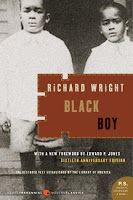
Memoir Review: Black Boy

When I decided to focus my February reading on Black History Month, I went through a lot of audio books and found it very convenient. Richard Wright's Black Channel, originally published in 1945, is a reminder of a boy's difficult childhood and youth in rural Mississippi and his adult life in Chicago in the first half of the 20th century. The life of a young man in a constant struggle and the author is a compelling, compelling (and sometimes scary) story with a lot of interest in himself, family and other people of color.

Richard begins his memories of his four-year-old son, Nachz, Mississippi, living with his parents and brother. Shortly thereafter, his mother began a relentless struggle to care for her young children and support them financially. Ricardi studies a lot, but once the opportunity arises, he tries to make money to help his family, initially by doing work and doing odd jobs, even in a local bar to get customers a coin or nickel from books. . (And he drank his first drink as a child). To help the family he dropped out of eighth grade. They move to earn a living, sometimes moving with their families or occasionally living in small, dilapidated apartments. Richard's grandfather had a nice house and lived there for a while, but it was very religious with very strong ideas of how Richard should be, and in that life he did not feel comfortable with Richard and his mother ( although they had to were patient for a while). As he grew and began to read more and learn more about the world around him, Richard began to notice the stark contrast between blacks and whites in the South. As an intelligent and educated young man, he could not understand why things were happening and why people tolerated such disgusting treatment. Eventually, Richard escaped to North Chicago and was able to transfer his mother and brother there, although life was not easy. Richard was surprised to find that whites (usually Jews or other foreigners) treated him with kindness and justice, even though the majority of the population was anti-apartheid, even in the northern highlands. He withdrew from the Communist Party for his speech on equality and the presence of other educated blacks, but he was quickly upset by their quarrels and other issues.

Richard's life story is fascinating, both with its extraordinary age and with a fascinating look at Jim Crow South and the experiences of blacks in the early 1900s. Originally published in 1945, the narrator is not actually an author, but Peter Francis James has done an amazing job of fully capturing the voice of the child and the person, so you feel like telling the story directly ( audio example here ). While the discrimination and abuse he faces in Richard and his family is often disturbing, there are also funny moments when Richard remembers his childhood flourishing. The first half of the book, set in Mississippi, was a little more interesting to me than the subsequent episodes of Richard's involvement with communism, but I was still immersed in his powerful and compelling story from beginning to end.

Old classic

Harper Audio

This book is suitable for the following 2022 reading activities:

Back to Classics Probationary non-fiction classics

Non-fiction test (# 3) - in the social history category.

Diversity test

Call for Literary Travel - Mississippi

Publication I received this book from the publisher for an honest review. My review is my opinion and does not depend on my relationship with the publisher or author.


Advertising. This post contains accompanying links. Purchasing these links cost me a small commission (a penny to buy) to make up for the time I spent writing posts for this blog at no extra cost.


Visit the YouTube channel for more book fun !


Listen to a beautifully read and / or audio recording of Richard Francis James as an early child from an audio book .


You can buy a book through Bookshop.org , your purchase supports the independent bookstore of your choice (or all independent bookstores): Ease of buying online, but buy on the spot anyway!


Or you can order Black Boy from a Free International Shipping bookstore .

Friday, 24 June 2022

Memoir Review: Six Walks: In the Footsteps of Henry David Thoreau

Booktopia 2022 is approaching (click Events for details ; Booktopia 2019 Roundup ) and I'm still reading the new editions of the authors that will be here this weekend. Last month I read Ben Shattuk's memoir , Six Walks: In the Footsteps of Henry David Thoreau . This quirky non-fiction book is filled with nature, beautiful open writing, and my favorite kind of introspection in memory.

The author began spontaneously picking up some of the Thoreau rides at the lowest point of his life. He went for a walk along the coast of Cape Cod, completely oblivious and without equipment (it was a bit like Bill Bryson's Walk in the Woods in those days!). However, he met some amazing people, saw amazing places, and came out a little better mentally and physically, so he continued his mission. He based six of his travels on published books, Thoreau's essays and Thoreau's personal diary (which I believe has been published). As often as possible, he tries to recreate the same place as Thoreau, even if our modern world has changed things a bit. With two walks on Cape Cod (in and out), he climbed Mount Katahdin in Massachusetts, along the coast of MA / RI, from his home in the salt marsh where his family lived for generations. Menin canoeing with a friend at Baxter State Park (north end of the Appalachian Trail) and Allagash Wilderness Waterway in northern Maine, on an island where Toro and his friends camped out for their canoe trip. In this book, Shattuk shares his deepest thoughts and feelings, as well as his observations on nature and quotes from Thoreau himself. The result is an emotional and physical journey.

From Thoreau, on how life reflects the way you walk, quoted in the book:

"Yet there is a consolation to the traveler who suffers the most on the dusty roads that the path followed by his feet is the perfect symbol of human life - now he goes up the hill, now he goes down to the valley. He has continued his old lessons and although very tired and tired of traveling, it was still an authentic experience.

From Shattuk, who compares nature to life:

"Sadness and joy are in the same life, but feel the chill of the sun entering the forest."

Since he loves nature, enjoys hiking (as much as possible) and visiting Cape Cod and Maine (one of my favorite places), I enjoyed this trip with Shattuck. His writings on nature are lyrical, permeating the forests, lakes and coasts of his pages. I am embarrassed to admit that I have never read Thoreau (I intend to improve it), so I enjoy reading those parts of his many writings. And in this book I was able to appreciate the healing power of nature and the author's personal journey. He accompanied this beautiful writing with his sketches, so beautiful that even though I had read ARC on the Kindle, I ordered a hard cover. All these elements come together in a beautifully written memoir that blends nature, travel, literature and personal experiences. Can't wait to meet Ben Shattuck at Booktopia in a few weeks!

175 pages, pewter house book

Audio: Blackstone Publishing

PLEASE NOTE: Six Walks: In the Footsteps of Henry David Thoreau will be released on April 19, 2022.

This book aligns with the following 2022 reading challenges :

Nonfiction Reader Challenge (Wild Animals Category)

Literary Escape Challenge - Maine


Disclosure: I received this book from the publisher in exchange for an honest review. My views are my own and are not influenced by my relationship with the publisher or author.


Note: This article contains general links. Buying from this link earns me a small commission (cents per purchase) as compensation for the time spent writing this blog at no additional cost.


Check out my YouTube channel for more book fun !


Listen to a sample audiobook here and / or download it from Audible . There is an audiobook narrated by actor Jonathan Todd Ross. I assume the audio clips will be released on the book's release date.


You can purchase books through Bookshop.org , where your purchase will support the independent bookstore of your choice (or all independent bookstores) - the convenience of buying online when you shop locally!


Or you can order Six Walks: In the Footsteps of Henry David Thoreau from Book Depository , free worldwide shipping.

It's Monday 1/24! What Are You Reading?

Hosted by The Book Date I am slowly recovering from COVID, slowly. Last week I achieved two important milestones. tested negative for Cov...